How to Finance a Duplex, Fourplex or Apartment building in Salem & Keizer, Oregon
TL;DR
Financing a duplex, fourplex, or apartment building in Salem or Keizer depends on two things: unit count and whether you will live in the property. Two- to four-unit properties can use residential multifamily financing, while five or more units generally require commercial multifamily financing.
- 2–4 units, owner-occupied: FHA, conventional, and some VA loan options may be available.
- 2–4 units, investor-owned: Conventional investment loans and DSCR financing are common options.
- 5+ units: Commercial, portfolio, HUD, Fannie Mae multifamily, or Freddie Mac multifamily financing may apply.
- Multifamily mortgage rates vary by loan type, down payment, credit, property income, and loan structure, so compare the full terms, not just the interest rate.
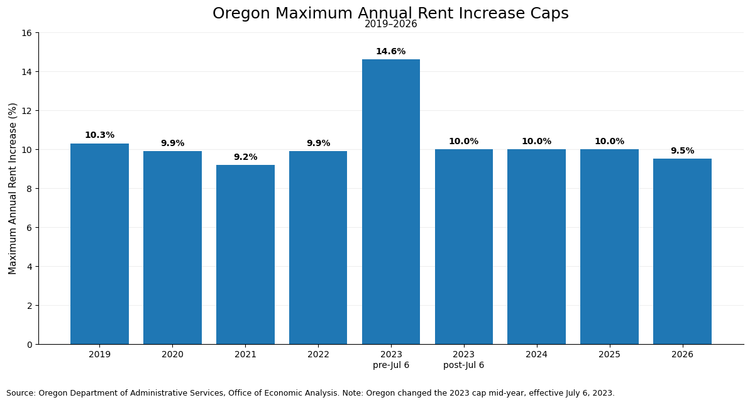
- Oregon's 10% rent increase limit for 2027 can affect projected rental income and multifamily loan underwriting.
The question I get asked most about buying a duplex, fourplex, or apartment building in Salem or Keizer isn't, "What's a good cap rate?" or "What's rent doing this year?"
It's much simpler:
Can I just get a regular mortgage on this?
And the answer depends heavily on two things:
- How many units you're buying
- Whether you're going to live in one of them
Those two questions divide multifamily financing into three very different categories:
- 2–4 units when you plan to live in one of the units
- 2–4 units purchased strictly as an investment
- 5+ units purchased as an investment property
That distinction matters because a duplex, triplex, or fourplex is still considered residential real estate for mortgage purposes. Once you cross into five units or more, you've entered the commercial multifamily lending world.
Here's my position on this, and I say it the same way I'd say it about wiring your own electrical panel: financing a small apartment building is not something you should piece together using ChatGPT, YouTube videos, and online rate calculators.
There's nothing wrong with doing your research. You absolutely should understand the basics. But this is exactly the kind of transaction where you want a lender and real estate agent who understand investment property financing sitting in your corner.
Why?
Because loan limits, reserves, down payment, occupancy, rents, property condition, credit, debt-to-income ratios, DSCR requirements, and Oregon landlord laws can all affect one another.
That's a conversation, not a lookup.
Why Unit Count Changes Everything
One of the first questions I ask an investor is:
How many units are you actually looking at?
Not just the budget.
Not just the neighborhood.
The number of units.
A $700,000 fourplex and a $700,000 five-unit apartment building could sit two blocks apart in Salem and require completely different loan applications, underwriting standards, appraisals, and down payments.
Price doesn't draw the line.
Unit count does.
Here's how I would break it down.
Option 1: Buying 2–4 Units and Living in One Unit
If you're purchasing a duplex, triplex, or fourplex and you plan to make one of the units your primary residence, you are still in the residential mortgage world.
This is sometimes called house hacking, although plenty of buyers simply look at it as buying a home that also happens to generate rental income.
Owner-occupied buyers may have access to financing options such as:
- FHA financing
- Conventional owner-occupied financing
- Certain VA programs for eligible borrowers
- Other lender-specific residential programs
The biggest advantage is that owner-occupied financing can require considerably less cash upfront than buying the same property strictly as an investment.
FHA Financing for 2–4 Units
FHA allows qualifying borrowers to purchase properties containing up to four residential units while living in one of those units as their primary residence.
For 2026, the FHA baseline loan limits are:
- 2 units: $693,050
- 3 units: $837,700
- 4 units: $1,041,125
Actual FHA limits can vary by county, so a lender should verify the specific limit for the property you're considering.
Conventional Financing for 2–4 Units
Conventional financing also allows owner-occupied multifamily purchases.
And one thing buyers are often surprised to learn is that the conventional loan limit increases as the unit count goes up.
For 2026, the baseline conforming loan limits in most of the country are:
- 2 units: $1,066,250
- 3 units: $1,288,800
- 4 units: $1,601,750
Those are substantially higher than the $832,750 one-unit conforming limit you may see quoted online.
What Are Interest Rates Like for an Owner-Occupied 2–4 Unit Property?
This is where I want buyers to be careful about comparing whatever number they see on Google to the quote their lender gives them.
As of October 2, 2026, Mortgage News Daily's national average for a standard 30-year fixed mortgage is approximately 7.49%.
Think of that as a market benchmark, not your personal quote.
An owner-occupied duplex, triplex, or fourplex may price differently based on:
- FHA versus conventional financing
- Credit score
- Down payment
- Loan amount
- Number of units
- Points paid upfront
- Debt-to-income ratio
- Whether projected rental income is being used to qualify
FHA rates may sometimes carry a lower note rate than conventional financing, but FHA also includes mortgage insurance that needs to be factored into the total payment.
So when somebody tells me, "I heard rates are 7.5%," my response is usually:
That's a useful reference point. It isn't necessarily your rate.
Have your lender run the actual scenario.
Don't Forget About Reserves
Multifamily owner-occupied financing can also come with additional reserve requirements.
A buyer purchasing a fourplex should not assume the underwriting requirements will look identical to buying a single-family home simply because both are residential mortgages.
That is another reason I like buyers to have the lender involved before they start writing offers rather than after we've already found the property.
If you're brand new to this strategy, you may also want to read my guide to buying your first duplex in Salem or Keizer.
Option 2: Buying 2–4 Units Strictly as an Investment
Now let's take the same duplex, triplex, or fourplex and change one thing:
You're not going to live there.
It's still considered a residential property because it contains four units or fewer, but the financing changes because you're now purchasing an investment property.
There are generally two common paths investors look at:
Conventional Investment Property Financing
With traditional conventional investment financing, the lender generally looks at you as the borrower.
They're considering things such as:
- Your personal income
- Your existing debts
- Credit score
- Available reserves
- Down payment
- Existing real estate obligations
- Rental income from the subject property when permitted under underwriting guidelines
This can be a very good option for an investor with strong income, good credit, and enough room in their debt-to-income ratio.
DSCR Financing
The other term you'll hear frequently is DSCR, which stands for Debt Service Coverage Ratio.
DSCR loans are designed specifically for investment properties and generally focus much more heavily on whether the property's rental income supports the proposed housing payment rather than qualifying primarily from your personal W-2 or tax-return income.
In very simple terms:
Does the property produce enough rent to support its debt?
That makes DSCR financing attractive to investors who own multiple properties, are self-employed, or simply don't fit neatly inside conventional debt-to-income underwriting.
But it doesn't mean the lender ignores everything else.
Credit, down payment, reserves, rents, property condition, loan amount, prepayment penalties, and the strength of the deal can still affect the terms you receive.
What Are Interest Rates Like for a 2–4 Unit Investment Property?
Expect investment-property financing to price differently than financing your primary residence.
Traditional conventional investor loans generally carry pricing adjustments compared with comparable owner-occupied financing, so I would not take today's roughly 7.5% owner-occupied residential benchmark and assume your investment-property quote will be identical.
DSCR pricing varies even more widely.
Recent lender pricing in 2026 shows DSCR loans ranging roughly from the 6% range to above 10%, depending on leverage, credit, property cash flow, loan structure, points, and other factors. Some advertised rates start lower, but those are generally best-case scenarios rather than the number every borrower receives.
That spread is exactly why I don't like telling investors:
"DSCR rates are 7.25%."
Maybe.
Maybe not.
Your property could be 6-something.
It could be 8-something.
It could be higher.
The building and the borrower both matter.
The better question for your lender is:
"Show me the payment, cash required, prepayment penalty, points, reserves, and total loan structure for both conventional and DSCR financing on this specific property."
Then compare the whole package instead of shopping based solely on the advertised rate.
Oregon Rent Rules Matter When You're Underwriting the Property
If you're purchasing an occupied investment property in Oregon, you also need to understand what the existing leases allow and what Oregon law allows you to do with rents going forward.
For 2026, Oregon's maximum allowable annual rent increase for most covered residential tenancies is 9.5%.
For 2027, that maximum increases to 10% for covered tenancies.
That does not mean every landlord can automatically raise every tenant's rent by that amount. Exemptions, notice requirements, tenancy dates, local requirements, and other landlord-tenant rules may apply.
But when you're analyzing an investment, you absolutely need to understand the difference between:
Market rent
and
What you can legally and realistically collect from the existing tenant.
Those are not always the same number.
Option 3: Buying 5+ Units as an Investment
Now we cross the line.
The moment you purchase a property containing five or more residential units, you are no longer dealing with a standard residential mortgage.
You're generally in the commercial multifamily lending world.
That means:
- No standard FHA single-family loan
- No conventional Fannie/Freddie 1–4 unit residential mortgage
- Different appraisal standards
- Different underwriting
- Different loan terms
- Different reserve requirements
- Much more emphasis on property income and expenses
This is where the building itself starts becoming the central character in the financing conversation.
A commercial multifamily lender typically wants to understand things like:
- Current rent roll
- Historical income
- Operating expenses
- Vacancy
- Property taxes
- Insurance
- Repairs and maintenance
- Management expenses
- Net operating income
- Debt service coverage
- Property condition
- Your experience and financial strength as the borrower
Instead of simply asking:
"Can the Buyer afford this payment?"
the lender is also asking:
"Can this building reliably support this debt?"
That's an entirely different underwriting conversation.
What Are Interest Rates Like on 5+ Unit Apartment Buildings?
Here's something that surprises a lot of newer investors:
A commercial apartment-building loan is not automatically more expensive than a residential mortgage.
As of September 2026, published Oregon apartment-loan pricing for some qualified 5+ unit transactions showed rates in approximately the low-to-mid 6% range, with some larger agency multifamily programs advertising starting rates below 6%.
For example, recent published Oregon apartment financing showed approximate starting rates around:
- 6.27% for certain 5-year fixed apartment loans
- 6.33% for certain 7-year fixed loans
- 6.39% for certain 10-year fixed loans
Those were advertised best-case scenarios, and actual pricing depends heavily on the property and borrower.
Compare that with today's residential 30-year benchmark around 7.5%, and you can see why saying "commercial loans always have higher rates" isn't necessarily accurate.
But there's an important catch:
You cannot compare the interest rate alone.
A commercial loan may have:
- A 5-, 7-, or 10-year fixed period
- A 20-, 25-, or 30-year amortization
- A balloon payment
- Prepayment penalties
- Yield maintenance
- Different recourse requirements
- Higher closing costs
- Different appraisal and environmental-report requirements
So a 6.3% commercial loan and a 7.5% 30-year residential mortgage are not necessarily apples-to-apples products.
Again, look at the complete loan structure.
Portfolio and Agency Financing for 5+ Units
Once you're shopping five-unit-and-larger properties, you'll probably start hearing terms like:
Portfolio loan
Fannie Mae multifamily
Freddie Mac Small Balance
HUD financing
Commercial bank financing
Credit union financing
CMBS
You do not need to become an expert in every one of those before buying an apartment building.
You do need a lender who understands which ones are realistic for your particular deal.
For example, Fannie Mae and Freddie Mac both have multifamily loan programs designed for apartment properties, including small-balance programs.
Recent published Fannie Mae small-balance multifamily pricing in September 2026 showed roughly 6.20% to 6.60% depending on the fixed period, while Freddie Mac small-balance pricing was in a similar general range. Again, these are examples of advertised program pricing, not a guaranteed rate for a Salem or Keizer property.
For a smaller local apartment building, a community bank or credit union portfolio loan may also make more sense than an agency program.
That's why the property needs to come first.
Then you match the loan to the deal.
Not the other way around.
The Simplest Way to Remember All of This
If you take nothing else away from this article, remember this:
2–4 units + you live there = residential owner-occupied financing
Think FHA, conventional, VA if eligible, and other residential programs.
2–4 units + you don't live there = residential investment financing
Think conventional investment financing or DSCR.
5+ units = commercial multifamily financing
Think banks, credit unions, portfolio lenders, Fannie Mae multifamily, Freddie Mac multifamily, HUD, and other commercial programs.
Same general category of real estate.
Three very different loan conversations.
What Info will Your Lender want to see?
You don't need a 40-page investment package before making your first phone call.
Start with:
- Property address
- Purchase price
- Number of units
- Whether you plan to occupy one
- Current rent roll
- Copies or basic terms of existing leases
- Property expenses if available
- Approximate down payment available
- Your income and employment situation
- Approximate credit profile
- Current real estate owned
- Cash reserves available after closing
With those pieces, a lender can usually point you toward the financing category worth exploring.
And if you're just beginning to consider an investment property, read through my first-time buyer guide for Salem and Keizer as well. A lot of the fundamentals still apply even when the property has multiple units.
My Biggest Advice Before You Start Shopping
Don't wait until you find the perfect fourplex or apartment building to figure out financing.
Talk to your lender first.
Have them show you what you qualify for as:
- An owner-occupant
- A conventional investor
- A DSCR borrower
- A commercial multifamily buyer, if you're considering 5+ units
Sometimes the financing structure will completely change which property makes the most financial sense.
And remember: the rate you see online is only one piece of the deal.
Down payment, reserves, monthly payment, loan term, prepayment penalties, rental income, operating expenses, and how long you plan to own the property can matter just as much.
If you're considering buying a duplex, triplex, fourplex, or apartment building in Salem, Keizer, or elsewhere in the Willamette Valley, I'd be happy to help you evaluate the property side of the equation and connect you with a lender who can run the actual financing scenarios.
You can find my contact information, current listings, and other Salem-Keizer real estate info at smire.com/brokers/jordan-sparks and SparksPropertyGroup.com.
Interest rates and loan programs discussed in this article are examples based on market information available in October 2026. Rates can change daily and vary based on credit, loan-to-value, occupancy, property type, loan amount, points, lender, and underwriting. Always obtain current loan terms directly from a qualified lender before making a purchase decision.

Jordan Sparks
Principal Broker, Sparks Property Group at SMI Real Estate. Specializing in Multifamily and Investment property in Salem, Keizer, and the Willamette Valley. Licensed in Oregon, #200610098.
jordan@smire.com · 541.646.0650
Connect with Sparks Property Group ↗




Member discussion